Key points
Air volume, not floor area
Coverage is calculated in cubic metres of air, not square feet of floor.
Air movement matters
Air changes, supply and return vents and open doors all move scent.
Calibrated on site
Calculations set the starting point; testing in the space sets the result.
Why coverage is calculated in cubic metres
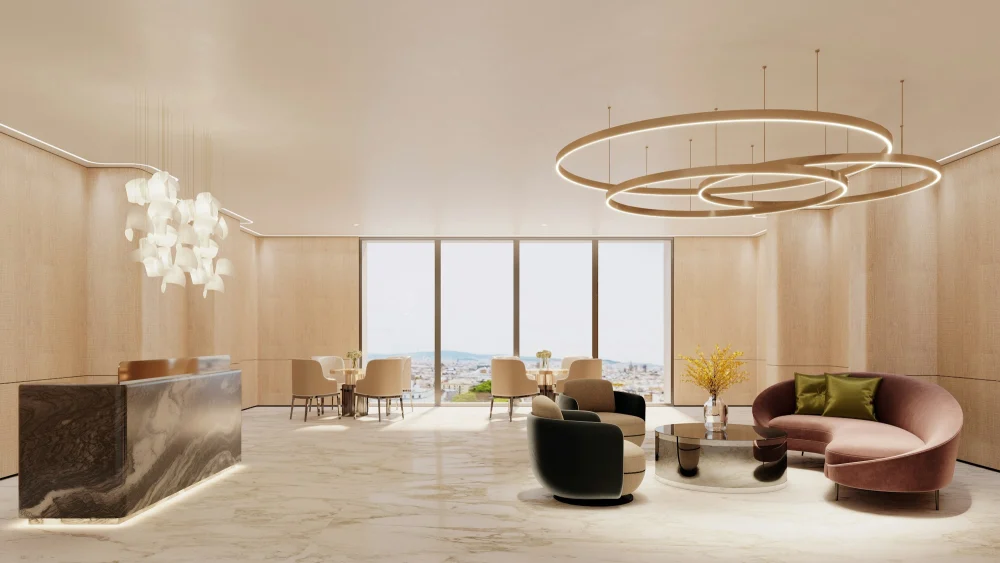
Fragrance disperses through air, not across floors. So the starting point for scent coverage is the volume of air in a space: floor area multiplied by ceiling height. A 5,000 sq ft lobby (about 465 m²) with a 6 m ceiling holds roughly 2,800 m³ of air, far more than the same floor area with a standard ceiling.
Commercial diffusers are rated by the air volume they can scent. Matching that rating to each zone’s air volume, rather than to its floor area, is the difference between even coverage and a scent that fades halfway across the room.
What else changes the calculation
Air changes per hour, the position of supply and return vents, how often doors open and how many people pass through all affect how scent travels. In air-conditioned Singapore buildings, the ACMV system often decides where scent goes. That is why calculations are followed by calibration in the space itself.
Factors in every coverage calculation
Used to size every large-space scenting and HVAC programme.
Floor area and ceiling height (air volume)
Air changes and ACMV supply and return positions
Entrances, openings and footfall
Required intensity for each zone
From calculation to even coverage
Three steps.
Measure
Record floor area, ceiling height and the air system serving each zone.
Size
Match diffusion capacity and number of points to each zone’s air volume.
Calibrate
Test across the space and adjust intensity until coverage is even.
Frequently asked questions
1. How do you calculate scent coverage?
Start with air volume (floor area times ceiling height), then adjust for air movement, openings and footfall.
2. How many diffusers does a lobby need?
It depends on air volume and layout. Large or tall lobbies usually need several diffusion points or HVAC integration.
3. Why does a tall atrium need more capacity?
Because it holds much more air than its floor area suggests.
4. Does air-conditioning help or hinder?
Both. ACMV systems can carry scent evenly, but strong airflow can also move it away from where it is needed.
5. Is there a size limit?
No. We have scented spaces up to 50,000 sq ft of exhibition space at Marina Bay Sands.
6. Can coverage be checked after installation?
Yes. Calibration is part of our managed service.
Get started
Get your building’s coverage right
Book a lobby scent tier audit and we will assess coverage zone by zone.